
TL;DR:
- Rebranding involves a strategic overhaul of a company’s identity, including name, logo, messaging, and market positioning, to align with new business goals. It requires coordinated updates across visual, verbal, legal, and operational elements, especially considering Dubai’s unique legal regulations such as Dubai Law No. (1) of 2025. Success depends on addressing genuine business changes, thorough legal screening, cross-department collaboration, and a phased implementation plan.
Rebranding is the deliberate, strategic transformation of a company’s identity, including its name, logo, messaging, and market positioning, to realign with new business goals or changed market conditions. According to Wikipedia’s definition, this process often includes changes to legal names, advertising themes, and overall brand strategy to reposition a business or move it upmarket. For small and medium-sized businesses in Dubai and the UAE, understanding what rebranding truly involves is the difference between a costly misstep and a growth-defining move. This guide covers the full rebranding definition, how it differs from a brand refresh, the legal realities of operating in the UAE, and the strategies that actually work in this market.
What is rebranding and what does it actually change?
Rebranding is a strategic identity transformation that goes far beyond updating a logo or picking new brand colors. It touches every layer of how a business presents itself: its name, visual system, verbal tone, market positioning, and core values. Think of it as changing not just the face of your business, but the story it tells and the audience it speaks to.
The components that typically change during a rebrand include:
- Visual identity: Logo, color palette, typography, and design system
- Verbal identity: Brand name, tagline, tone of voice, and messaging framework
- Market positioning: The segment you target and the promise you make to that segment
- Brand values: The principles that guide how the business operates and communicates
- Advertising strategy: Campaigns, channels, and the overall narrative pushed to market
Each of these elements is interconnected. Changing your positioning without updating your messaging creates confusion. Updating your logo without revising your values creates a hollow visual exercise. A genuine rebrand addresses all of these in a coordinated way.
The most useful mental model here comes from the world of software: rebranding acts like an operating system upgrade. Every application running on top of that system, meaning every customer touchpoint, every piece of content, every employee interaction, needs to be compatible with the new version. If even one department keeps running the old system, the experience breaks down.

Pro Tip: Before you define what needs to change, write down what your brand currently stands for and who it currently serves. If that description no longer matches your business reality, you have a clear case for rebranding.
How does rebranding differ from a brand refresh?
The distinction between a rebrand and a brand refresh is one of the most misunderstood concepts in brand strategy, and getting it wrong is expensive. A brand refresh updates the visual and verbal presentation of a brand without changing its underlying strategy, positioning, or audience. A rebrand changes the strategy itself.
Here is a direct comparison:
| Factor | Brand refresh | Rebrand |
|---|---|---|
| Strategic foundation | Unchanged | Fundamentally changed |
| Scope | Visual and verbal updates | Name, positioning, values, identity |
| Risk level | Lower | Higher, requires full planning |
| Resources required | Moderate | Significant, multi-department |
| Trigger | Outdated look, minor drift | New market, new audience, merger |
| Timeline | Weeks to a few months | Several months to over a year |
A Dubai restaurant that updates its menu design and refreshes its Instagram aesthetic is doing a brand refresh. That same restaurant pivoting from casual dining to a premium experience, changing its name, and targeting a different customer segment is rebranding. The first is a tune-up. The second is a rebuild.
The practical test is what MetaBrand calls the scope/strategy test: if your strategic foundation has changed, it is a rebrand. If only the surface presentation needs updating, it is a refresh. Misclassifying a rebrand as a refresh leads businesses to underinvest in legal, operational, and internal alignment work, which creates market confusion and wastes the investment.
Pro Tip: Ask yourself one question before deciding: “Has our target audience, core promise, or competitive position changed?” If yes to any of these, you are looking at a rebrand, not a refresh.
What legal and operational factors should Dubai SMBs consider?
The UAE market carries specific legal and operational realities that make rebranding more complex than in many other markets. Skipping this layer is one of the most common and costly mistakes local SMBs make.
Dubai emblem regulations
Dubai Law No. (1) of 2025 directly affects any brand that incorporates official Dubai emblems or government-like symbols in its identity. The law bans commercial use of these emblems without explicit permission and prohibits misuse entirely. For businesses building a new visual identity with a local or governmental feel, this is not a minor footnote. It is a hard legal constraint that needs to be addressed in the earliest design stages, not after a logo has been finalized and printed.
Trademark and goodwill risks
Trademark risk and goodwill loss are among the most significant financial risks in any rebranding project involving a name change. The deeper your brand is embedded in the market, the more disruptive and costly a name change becomes. In the UAE, where business relationships are built on reputation and word-of-mouth referrals, losing brand recognition through a poorly managed name change can set a company back years.
Goodwill is an accounting term, but it is also a business reality. The trust, recognition, and loyalty your current brand name carries has real monetary value. Changing that name means rebuilding that value from scratch in the minds of your customers, partners, and investors.
Operational disruptions to plan for
A rebrand touches far more than your marketing materials. The full operational scope includes:
- Website domain, content, and SEO equity migration
- Legal documents, contracts, and trade license updates
- Physical signage, packaging, and printed materials
- Employee training and internal communication rollout
- Investor and stakeholder communication strategy
- Social media handles, email addresses, and digital profiles
Rebranding requires updates across all of these simultaneously, or at least in a tightly coordinated sequence. A business that launches a new logo publicly while its trade license still carries the old name, or while its sales team is still using old email signatures, sends a fragmented signal to the market. That fragmentation erodes the credibility the rebrand was meant to build.
What are effective rebranding strategies for Dubai SMBs?
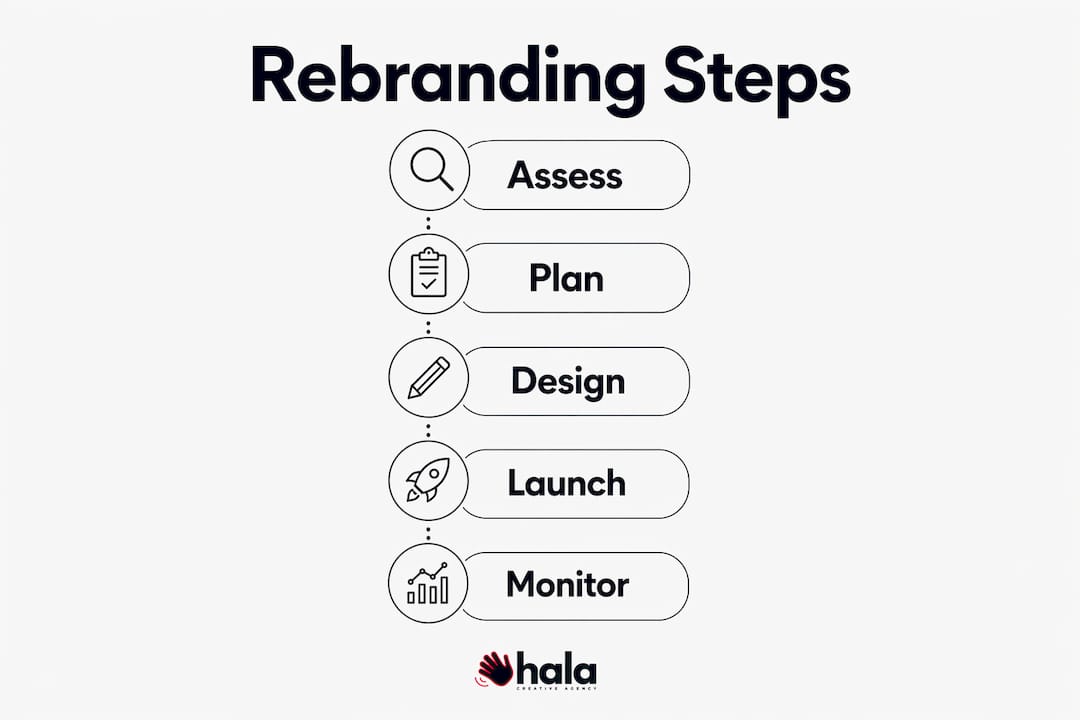
Executing a rebrand successfully in Dubai’s competitive market requires a structured approach. Here is a proven framework that works for SMBs operating in the UAE:
-
Anchor the rebrand to a real business change. The strongest rebrands are driven by genuine shifts: a new target market, a product expansion, a merger, or a change in competitive position. Rebranding for aesthetic reasons alone rarely delivers lasting results. Define the business reason first.
-
Run it as a cross-department program, not a marketing project. Multi-department rollout is what separates successful rebrands from failed ones. Legal, operations, HR, sales, and customer service all need to be part of the process. Assign a project lead with authority across departments.
-
Build a single source of truth for brand guidelines. Every team, agency, and vendor working with your brand needs access to one definitive brand guide. This document covers logo usage, color codes, tone of voice, messaging hierarchy, and approved imagery. Without it, inconsistency creeps in within weeks of launch.
-
Screen for legal constraints before design begins. In the UAE context, this means trademark searches, emblem compliance checks under Dubai Law No. (1) of 2025, and trade name availability verification with the relevant licensing authority. Doing this after design work is complete wastes money and time.
-
Set measurable goals and a phased rollout plan. Define what success looks like before you start. Metrics might include brand recall scores, website traffic from new audience segments, or lead quality improvements. A phased rollout, starting internally, then with key clients, then publicly, gives you time to catch inconsistencies before they reach the full market.
For Dubai SMBs, working with a local agency that understands both the creative and regulatory dimensions of the UAE market significantly reduces execution risk. Hala Creative Agency’s approach to branding for small businesses in the Middle East reflects exactly this kind of integrated thinking.
Pro Tip: Announce your rebrand internally before it goes public. Employees who learn about a rebrand from social media rather than from leadership become skeptical ambassadors at best and vocal critics at worst.
Key takeaways
Rebranding is a strategic identity transformation that requires legal screening, cross-department coordination, and a clear business rationale to succeed in the UAE market.
| Point | Details |
|---|---|
| Rebranding definition | A strategic change to name, positioning, values, and visual identity, not just a design update. |
| Rebrand vs. refresh | If your strategic foundation changes, it is a rebrand. Surface updates only equal a refresh. |
| UAE legal requirements | Dubai Law No. (1) of 2025 and trademark risks must be addressed before design work begins. |
| Operational scope | Rebranding touches legal documents, websites, signage, and employee training across all departments. |
| Execution framework | Anchor to a real business change, run cross-departmentally, and set measurable goals before launch. |
Why most Dubai SMB rebrands succeed or fail before the design brief is written
I have worked with enough businesses in this market to say this clearly: the rebrands that fail almost always fail in the planning phase, not the execution phase. The business owner decides the logo needs to change, hires a designer, and launches something new without ever asking whether the underlying strategy has actually shifted. That is a brand refresh being treated as a rebrand, and the market notices the mismatch.
The rebrands that succeed start with an honest conversation about what the business has become versus what it was when the original brand was built. In Dubai specifically, I see this most often with businesses that launched five or six years ago targeting one customer profile and have since organically shifted to a completely different one. The brand still speaks to the old audience while the business is trying to serve the new one. That gap is where the rebrand earns its investment.
The legal dimension is where I see the most avoidable damage. UAE trademark law and the Dubai emblem regulations are not obstacles. They are guardrails that protect your investment. Businesses that treat legal screening as a final checkbox rather than a first step end up redesigning assets they have already paid for. That doubles the cost and delays the launch.
My honest recommendation: treat your rebrand as a business transformation project with a branding output, not a branding project with some business implications. The framing changes everything about how you resource it, who you involve, and how you measure success. Understanding why a branding agency drives growth in Dubai is part of making that shift.
— Hisham
Ready to rebrand your business in Dubai?
Rebranding is one of the highest-leverage decisions a growing business can make, and one of the easiest to get wrong without the right support. Hala Creative Agency works with SMBs across Dubai and the UAE to build brand identities that reflect where the business is going, not just where it has been.
From brand strategy and visual identity to digital rollout and market positioning, Hala Creative’s team combines regional market knowledge with a data-driven approach that keeps your rebrand on time and on brief. Whether you are starting from scratch or repositioning an established name, explore Hala Creative’s marketing and branding services to find the right starting point for your business.
FAQ
What is rebranding in simple terms?
Rebranding is the process of changing how a business presents itself to the world, including its name, logo, messaging, and positioning, to better reflect its current goals and audience. It goes beyond visual design to include strategic and operational changes across the entire organization.
How do I know if my business needs a rebrand or just a refresh?
Apply the scope/strategy test: if your target audience, core promise, or competitive position has changed, you need a rebrand. If only your visual presentation feels outdated, a brand refresh is the more appropriate and lower-risk option.
What legal checks are required for rebranding in Dubai?
Dubai SMBs must conduct trademark searches, verify trade name availability with the relevant licensing authority, and comply with Dubai Law No. (1) of 2025 regarding the use of official emblems. These checks should happen before any design work begins.
How long does a rebrand take for a small business?
A full rebrand for a small to medium-sized business typically takes several months to over a year, depending on the scope of changes and the number of departments involved. A brand refresh can be completed in weeks.
What are the biggest risks of rebranding?
The two most significant risks are trademark and goodwill loss from a name change, and market confusion from an inconsistent rollout. Both are manageable with early legal screening and a coordinated, phased launch strategy.