
TL;DR:
- Building a strong brand in Dubai and the GCC requires a comprehensive identity system that goes beyond just a logo to include colors, fonts, tone, and values. Bilingual branding enhances trust and expands market reach, with authentic storytelling fostering customer loyalty before selling products or services. Consistent use of practical tools and ongoing measurement is essential for refining your brand and establishing credibility in a competitive market.
You’re running a small business in Dubai or across the GCC, and you already know the market doesn’t give you much room to be forgettable. Competition is dense, customers are bilingual, and the gap between looking like a local side hustle and a credible brand comes down to decisions most business owners haven’t thought through yet. These branding tips for small businesses cut straight to what actually works in this market, without requiring a big agency budget or a full marketing team.
Table of Contents
- Key takeaways
- 1. Define your brand identity as a system, not just a logo
- 2. Build a credible online presence on a smart budget
- 3. Tell your story before you sell your product
- 4. Use bilingual branding as a strategic tool, not an afterthought
- 5. Pick your practical branding tools and use them consistently
- 6. Build your social media presence with intention
- 7. Measure what’s working and refine without overthinking it
- My honest take on small business branding in the Middle East
- Ready to build a brand that actually works for your business?
- FAQ
Key takeaways
| Point | Details |
|---|---|
| Identity beats aesthetics | A logo alone isn’t a brand. Build a full system: colors, fonts, tone, and values. |
| Bilingual branding builds faster trust | UAE SMEs using both Arabic and English reach more of the GCC market and connect more emotionally. |
| Consistency over perfection | Launch with a functional, consistent brand now rather than waiting for a flawless one later. |
| Storytelling drives loyalty | Sharing authentic founder and cultural stories creates stronger customer bonds than advertising spend. |
| Measure and refine | Track engagement and conversions regularly so your branding improves with your business. |
1. Define your brand identity as a system, not just a logo
The single biggest branding mistake small businesses make is treating the logo as the brand. It isn’t. Brand identity is a system that includes your color palette, typography, tone of voice, and the values behind every customer interaction. Your logo is one piece of that system.
Start by writing down your brand’s mission (what you do and why it matters), your vision (where you’re headed), and your core values (the principles that guide decisions). These don’t need to be elaborate. Three to five sentences total works fine. What matters is that they’re specific enough to actually guide choices.
From there, build your visual identity:
- Logo: Keep it simple and scalable. It should look just as clean on a phone screen as on a storefront sign.
- Color palette: Pick two to three primary colors and document the exact hex codes. Never approximate.
- Typography: Choose two fonts, one for headings and one for body text, and stick to them everywhere.
- Tone of voice: Are you formal or casual? Warm or authoritative? Write two or three example sentences that capture your voice so anyone creating content for you can match it.
A one-page style guide covering these elements is all most small businesses need to stay consistent and build trust faster. You don’t need a 60-page brand book to get results.
Pro Tip: Document your brand colors as both HEX codes (for digital use) and Pantone references (for print). Swapping between approximate shades across materials is one of the fastest ways to look unprofessional.
For Dubai-based businesses specifically, the brand identity guide for Dubai SMBs at Halacreative is worth reading before you finalize your visual system.
2. Build a credible online presence on a smart budget
UAE SMEs can look professional online using affordable tools without large marketing teams or budgets. The key is knowing which tools to use and how to configure them properly.
Here’s what a lean, credible online setup looks like for a small business in the region:
- Website: Use WordPress or Wix with a premium theme. The design quality of paid themes is high enough that most visitors will never guess you didn’t hire a web studio.
- Custom email domain: Stop sending client emails from a Gmail or Hotmail account. A custom domain email (yourname@yourbusiness.com) costs less than AED 50 per year and immediately signals legitimacy.
- Google Business Profile: Set this up and optimize it completely. Add photos, your hours, your location in both Arabic and English, and actively collect customer reviews. This is often the first thing a local customer sees.
- Social media: Choose two or three platforms where your audience actually spends time. For most Middle East small businesses, that means Instagram, LinkedIn, and TikTok. Don’t try to be everywhere.
- Design tools: Canva and Adobe Express both offer free tiers with solid template libraries. Use them to create social graphics that match your brand colors and fonts every time.
Pro Tip: Post bilingual captions on Instagram and TikTok. Even if your primary language is English, adding an Arabic version of your caption increases reach across the GCC audience significantly and signals cultural respect.
3. Tell your story before you sell your product
Customers in the Middle East respond strongly to relationships and trust built before a transaction happens. That’s not a soft idea. Sharing authentic brand stories increases engagement and customer loyalty more than advertising spend does.
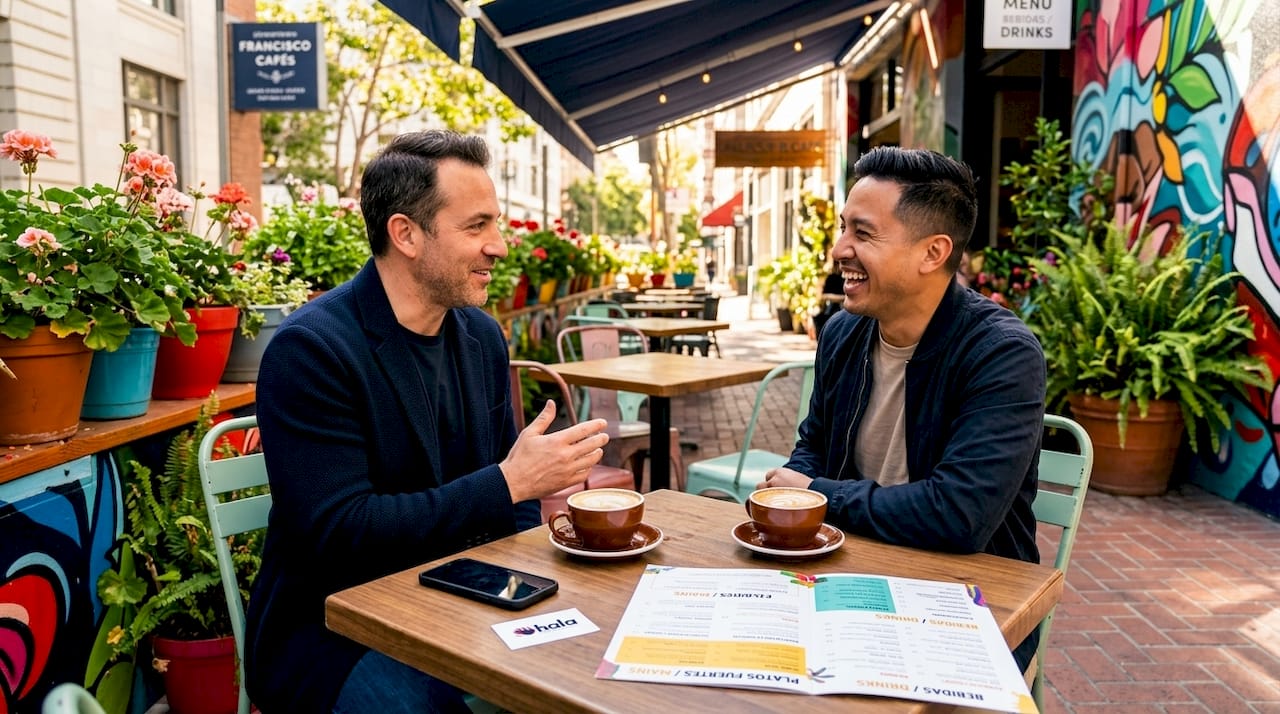
Your brand story doesn’t need to be dramatic. It just needs to be honest. Why did you start this business? What problem were you trying to solve? Was there a cultural moment, a family influence, or a frustration that pushed you to build something better? That context is what turns a transaction into a relationship.
A few messaging principles worth applying right now:
- Focus on customer benefits, not product features. “You’ll spend less time chasing invoices” lands harder than “our software has automated billing.”
- Develop three messaging pillars: the practical value you deliver, the emotional benefit you create, and the difference that makes you the right choice over alternatives.
- Use proof points actively. A customer quote, a before-and-after metric, or a short case study does more persuasive work than any tagline.
“Brands that clearly define what they prioritize and what they avoid have stronger, more credible positioning.” — BrandVM
Keep your tone consistent across your website, social media, and WhatsApp messages. When the voice shifts between channels, customers unconsciously feel something is off. Consistency is what builds familiarity, and familiarity is what builds trust.
4. Use bilingual branding as a strategic tool, not an afterthought
Most small businesses in the UAE treat Arabic as a translation requirement. The smarter approach is to treat it as a connection opportunity. Bilingual branding builds trust faster and expands reach across GCC markets in a way that English-only branding simply cannot.
The difference between translation and bilingual branding is nuance. A direct translation of your English tagline often loses the warmth or wit that made it work. Work with a native Arabic speaker who understands marketing, not just language, to adapt your messaging so it resonates rather than just reads correctly.
For your visual assets, consider how Arabic text flows from right to left and plan your layouts accordingly. A logo lockup designed only for left-to-right reading will look awkward in an Arabic-first context. Design both versions from the start, not as an afterthought.
5. Pick your practical branding tools and use them consistently
Here’s a straight comparison of the tools most useful for small business branding in the Middle East, based on function and cost:
| Tool | Best for | Cost |
|---|---|---|
| Canva Pro | Social graphics, presentations, brand templates | ~$13/month |
| Adobe Express | Quick branded content with AI features | Free tier available |
| WordPress + Elementor | Professional website with full customization | ~$10/month hosting |
| Google Business Profile | Local search visibility and reviews | Free |
| WhatsApp Business | Direct customer communication with catalog | Free |
| Mailchimp | Email marketing and audience segmentation | Free up to 500 contacts |
Reusable design templates and local brand collaborations expand reach affordably without requiring a dedicated design budget. Build a set of five to seven Canva templates for your most common content types (product posts, testimonials, announcements) and use them every week.
Pro Tip: Add your logo as a watermark to every image you post on social media. It takes 30 seconds in Canva and means every share or screenshot carries your brand with it.
Also worth using: partner with one or two complementary local businesses for cross-promotion. A café and a bookshop. A fitness studio and a healthy meal prep service. These collaborations are cost-free and introduce your brand to audiences that are already aligned with your values.
6. Build your social media presence with intention
The social media marketing approach for small businesses that actually works isn’t about volume. It’s about relevance and consistency on the right platforms.
Instagram remains the dominant visual discovery platform across the UAE and wider GCC. LinkedIn is where B2B credibility is built. TikTok has surged in reach, especially for younger consumers. Pick the two that match your audience and show up there reliably before considering a third.
For each platform, think in content categories rather than individual posts. For example: educational tips on Mondays, customer stories on Wednesdays, and product or service showcases on Fridays. This structure makes content creation faster and keeps your feed varied without being random.
Engagement matters more than follower count. A brand with 2,000 followers and genuine conversation in the comments builds more trust than one with 20,000 silent followers. Reply to comments, ask questions in your captions, and use Stories to show the human side of your business.
7. Measure what’s working and refine without overthinking it
Tracking engagement, conversions, and feedback allows targeted refinements that strengthen brand reputation over time. You don’t need a data analyst. You need a few reliable metrics and the discipline to check them monthly.
Here’s a practical measurement routine for small business owners:
- Website traffic: Check Google Analytics monthly. Look at which pages get the most visits and where people drop off.
- Social engagement rate: Calculate this as total interactions (likes, comments, shares) divided by reach. A rate above 3% is healthy for most small business accounts.
- Google Business reviews: Track your rating and the volume of new reviews each month. Reviews are branding, not just feedback.
- Lead sources: Ask new customers or leads how they heard about you. Do this consistently and you’ll quickly see which branding effort is actually driving results.
- Customer feedback themes: If multiple customers use the same word to describe you (fast, friendly, reliable), lean into that language in your messaging.
Pro Tip: Treat your brand style guide as a living document. Every time you add a new content format, color variation, or messaging update, write it down. This makes onboarding a freelancer or new team member dramatically faster.
Iterative brand refinement after launch is more valuable than waiting for flawless branding before market entry. Launch with what you have. Improve based on what you learn.
My honest take on small business branding in the Middle East
I’ve worked with enough small business owners across Dubai and the wider GCC to notice a pattern. The ones who struggle with branding usually have the same problem: they’re waiting for their brand to feel “ready” before they commit to it. They redesign the logo three times, spend months picking fonts, and still haven’t posted consistently on Instagram.
The businesses that actually build strong brands do the opposite. They pick something good enough, document it, and then show up with it every single day. Consistency over months is what creates recognition. Recognition is what creates trust. Trust is what creates sales.
I’d also push back on how most small businesses approach bilingual branding. They treat Arabic as a legal or regulatory box to check. That’s a missed opportunity. In my experience, the businesses that invest in genuinely adapted Arabic messaging (not just translated English copy) connect with Emirati and broader Arab customers at a completely different level. It signals respect. It signals belonging. And in a market built on relationships, that signal is worth more than any paid ad campaign.
One more thing. Effective brand positioning requires making deliberate tradeoffs. You cannot be the premium option, the budget option, and the fastest option at the same time. Pick your position. Own it. The businesses that try to please everyone end up being memorable to no one.
— Hisham
Ready to build a brand that actually works for your business?
Branding isn’t a one-time project. It’s an ongoing practice that compounds over time. If you’ve read this far and feel like you have the direction but not the bandwidth to execute it properly, that’s exactly where Halacreative can help.
Halacreative works with small and medium businesses across Dubai and the GCC to build brand identities, create bilingual digital content, and run the kind of digital marketing for Middle East SMBs that shows real results. From brand identity systems to social media management, the team blends creative thinking with data to make every dirham of your marketing budget work harder. Explore Halacreative’s marketing services for SMBs and take the next step toward a brand your customers will actually remember.
FAQ
What is small business branding and why does it matter?
Small business branding is the process of defining how your business looks, sounds, and feels to customers across every touchpoint. It matters because consistent, credible branding builds the trust that converts first-time visitors into repeat customers.
How much does branding cost for a small business?
Basic branding for a small business can be done for under AED 1,000 using tools like Canva, a paid WordPress theme, and a custom email domain. Professional agency support costs more but accelerates results significantly for businesses with growth targets.
Do I really need Arabic branding if my customers mostly speak English?
Yes. Even if your primary audience communicates in English, bilingual branding signals cultural awareness and expands your reach across the GCC. UAE SMEs using bilingual branding report faster trust-building and wider market reach.
What are the biggest branding mistakes small businesses make?
The most common mistakes are treating the logo as the entire brand, being inconsistent across channels, and trying to appeal to everyone instead of owning a specific position. A focused brand with consistent execution will always outperform a polished but scattered one.
When should I hire a branding agency instead of doing it myself?
If your business is growing and your current brand no longer reflects your quality or ambition, it’s time to bring in professionals. A branding agency in Dubai can compress years of trial-and-error into a focused strategy that positions you correctly from the start.