
TL;DR:
- Building a strong real estate brand starts with defining your niche, UVP, and brand promise before designing visuals. Consistent identity across all platforms increases recognition and trust, leading to more referrals. A disciplined, long-term approach to branding sustains client relationships and attracts the right audience.
Branding a real estate business is the process of building a consistent, recognizable identity that attracts the right clients and sets you apart in a crowded market. Real estate brand strategy, the industry term for this discipline, goes far beyond a logo or a color scheme. Consistent brand experience across every client touchpoint builds trust, generates more leads, and encourages referrals. Agents who skip this foundation compete on price alone, which is a race no one wins. This guide walks you through every step of knowing how to brand your real estate business, from defining your niche to choosing the right marketing channels.
How to develop a strong brand foundation for your real estate business
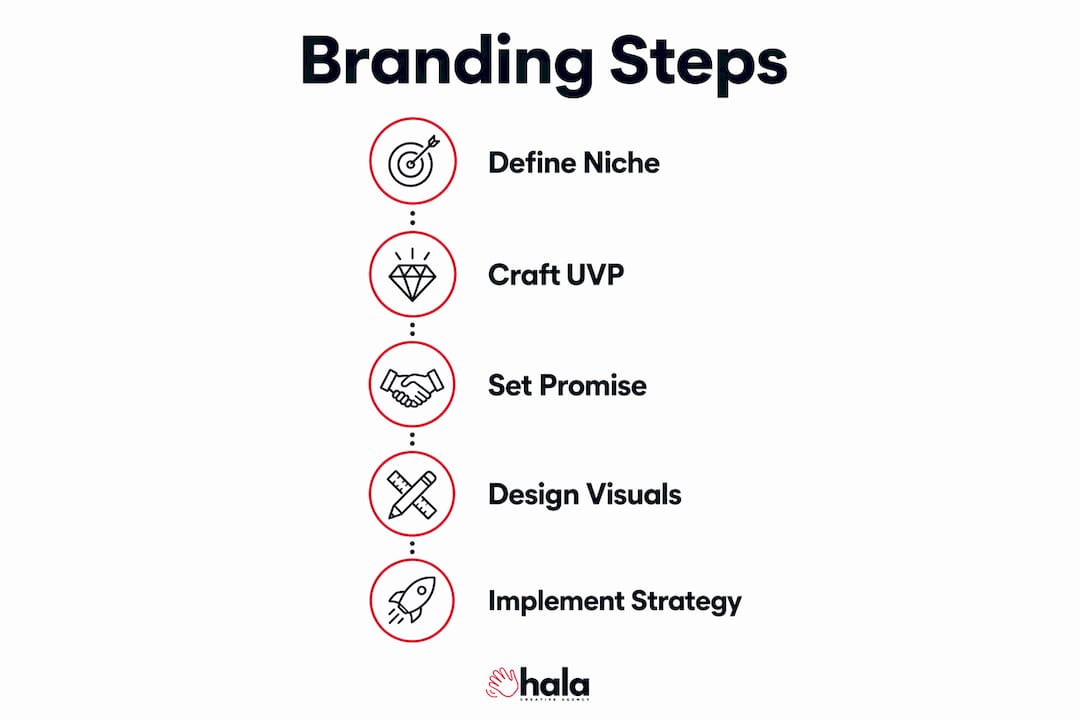
The most expensive mistake in real estate branding is prioritizing visual design before defining brand strategy. A logo designed before you know who you serve and why they should choose you will always feel generic. The foundation comes first, and it has three parts.

Define your niche. Agents who define a clear niche and unique value proposition distinguish themselves from competitors and attract the right clients. Your niche could be luxury waterfront properties in Dubai Marina, off-plan investments for overseas buyers, or family villas in Abu Dhabi suburbs. The more specific you are, the easier it is for the right client to recognize that you are the right agent.
Write your unique value proposition (UVP). Your UVP is one or two sentences that explain what you do, who you do it for, and what makes you different. Avoid vague claims like “I provide excellent service.” Instead, try something concrete: “I help first-time buyers in Dubai find ready properties under AED 1.5 million with zero hidden fees.” That sentence tells a specific person exactly why they should call you.
Set your brand promise. Your brand promise is the commitment you make to every client, every time. It governs how you answer emails, how you present listings, and how you follow up after a deal closes. Think of it as the behavioral standard behind your UVP.
Pro Tip: Resist the urge to open Canva or brief a designer until you have written your niche, UVP, and brand promise on paper. Designers need direction. Without it, you get a generic result that costs money and converts no one.
The creative strategy behind real estate marketing always starts with this kind of clarity. Skipping it means rebuilding later at twice the cost.
What does a cohesive visual identity actually include?
Visual identity translates your brand strategy into things people can see and remember. It is not just a logo. It is a system of elements that work together across every surface where your brand appears.
The core elements of a real estate visual identity are:
- Logo suite: A primary logo, a simplified version for small spaces, and a monogram or icon for social profile images and yard signs
- Color palette: Two to three primary colors with defined hex codes, plus one or two neutral tones for backgrounds and body text
- Typography: One heading font and one body font, both chosen to reflect your brand personality (authoritative, approachable, or premium)
- Photography style: A defined approach to listing photos, headshots, and lifestyle imagery that feels consistent across Instagram, your website, and print materials
- Templates: Pre-built layouts for social posts, email newsletters, property brochures, and direct mail pieces
Maintaining a consistent color palette and visual identity across all platforms can increase brand recognition by up to 80%. That number matters because recognition is what drives referrals. When a past client sees your branded post in their feed, they should know it is you before they read your name.
Pro Tip: Test your logo in black and white and at very small sizes before finalizing it. A logo that looks great at full size but turns into a blur on a yard sign or a 32-pixel social icon is not a finished logo.
| Visual element | What to define | Why it matters |
|---|---|---|
| Logo suite | Primary, simplified, and icon versions | Covers every surface from billboards to app icons |
| Color palette | 2–3 primary colors with hex codes | Drives the 80% recognition lift from consistency |
| Typography | Heading and body font pairing | Signals brand personality at a glance |
| Photography style | Lighting, composition, and editing rules | Keeps listings and social content visually unified |
| Templates | Social, email, print, and brochure layouts | Removes guesswork and speeds up content production |
What marketing strategies actually build a real estate brand?
Building a recognizable real estate business identity requires showing up consistently across multiple channels. No single channel is enough on its own.
Your website is the anchor. A professional real estate website acts as a central brand hub, providing controlled messaging, listings, and lead generation. Every other channel should point back to it. Your homepage headline should state your UVP within the first three seconds a visitor lands on the page. Understanding how web development shapes your brand is not optional in a market as competitive as Dubai.
Social media amplifies what you already stand for. Social media content aligned with brand identity amplifies reach and engagement when posted consistently and with purpose. Posting three times a week with branded templates beats posting daily with inconsistent visuals. Instagram and LinkedIn are the primary platforms for real estate professionals in the UAE, with Instagram driving visual discovery and LinkedIn building professional credibility.
Direct mail still works. Direct mail remains the most reliable channel for reaching motivated sellers who are not active online. A well-designed postcard campaign in a target neighborhood, sent consistently over three to six months, builds name recognition with exactly the audience you want. Pair it with a QR code that links to a branded landing page, and you connect offline attention to online conversion.
Community presence closes the loop. Sponsoring a local school event, attending a business council meeting, or hosting a neighborhood market update session puts your brand in front of people in a way no ad can replicate. Referrals from community relationships carry higher trust than any paid lead.
“The agents who win long-term are not the ones with the biggest ad budgets. They are the ones whose brand shows up the same way every time, in every place, until clients feel like they already know them before the first call.”
Tracking which channels produce leads is the only way to know where to invest more. Use UTM parameters on digital links and ask every new lead how they found you. The data will tell you where your brand is actually working.
What are the most common real estate branding mistakes?
Most real estate professionals make the same four mistakes. Recognizing them early saves significant time and money.
- Starting with design, not strategy. Ordering a logo before writing your UVP produces a brand that looks polished but says nothing. Clients cannot connect with a color scheme. They connect with a clear promise.
- Inconsistent brand elements across platforms. Using one headshot on LinkedIn, a different one on your website, and a third on your business card signals disorganization. Clients notice, even if they cannot name what feels off.
- Neglecting the post-sale experience. The client experience after a deal closes is part of your brand. A handwritten thank-you note, a one-year anniversary check-in, or a market update email keeps you top of mind for referrals. Most agents disappear after the keys are handed over.
- Letting brand assets go stale. A headshot from five years ago, a website that has not been updated since 2022, and a logo that no longer reflects your positioning all erode trust. Brand assets need a scheduled review at least once a year.
Pro Tip: Centralize all brand assets in a shared workspace such as Google Drive or Notion so every team member, assistant, or contractor pulls from the same approved files. This single habit eliminates most consistency problems.
The branding process for Dubai businesses follows a structured sequence for exactly this reason. Discipline in asset management is what separates brands that grow from brands that stagnate.
Key Takeaways
Effective real estate branding requires a clear strategy, consistent visual identity, and disciplined multi-channel marketing executed in that exact order.
| Point | Details |
|---|---|
| Strategy before design | Define your niche, UVP, and brand promise before commissioning any visual work. |
| Visual consistency drives recognition | A consistent color palette and identity can increase brand recognition by up to 80%. |
| Website is the brand hub | Your site must state your UVP clearly and serve as the destination for all other channels. |
| Direct mail still converts | Consistent direct mail campaigns reach motivated sellers who are not active on digital platforms. |
| Centralize brand assets | Store all approved files in one shared location to maintain consistency across every touchpoint. |
What I have learned after watching real estate brands succeed and fail
Real estate professionals often ask me whether they need a big budget to build a strong brand. The honest answer is no, but they do need patience and discipline.
The agents I have seen build genuinely strong brands share one trait: they treat every client interaction as a brand moment. The way they answer a phone call, the quality of their listing photos, the speed of their follow-up emails. None of that requires a large budget. It requires a standard, written down and followed consistently.
The agents who struggle are usually the ones who invested in a beautiful logo, launched a website, posted for two months, and then stopped when they did not see immediate results. Branding does not work on a two-month timeline. It works on a two-year timeline. The compounding effect of consistent presence is what builds the kind of reputation that generates referrals without asking for them.
One more thing: authenticity is not a marketing buzzword. In real estate, clients are making the largest financial decision of their lives. They will sense immediately if your brand is performing a persona rather than reflecting who you actually are. The most durable brands I have seen are built by agents who leaned into what genuinely made them different, not what they thought the market wanted to see.
— Hisham
Real estate branding support from Hala Creative Agency
Building a real estate brand that generates consistent leads takes more than good intentions. It takes a structured process, professional creative execution, and marketing channels that work together.
Hala Creative Agency works with real estate professionals across Dubai and the wider UAE to build brands that attract the right clients and hold up under competitive pressure. From brand strategy and visual identity to real estate marketing services that span social media, SEO, and paid advertising, the agency brings a data-driven approach to every engagement. If you are ready to build a brand that works as hard as you do, see how Hala Creative Agency drives growth for businesses in your market.
FAQ
What is real estate branding?
Real estate branding is the process of creating a consistent identity, including your messaging, visuals, and client experience, that makes your business recognizable and trustworthy. It covers everything from your logo and color palette to how you follow up after a closed deal.
How do I start building my real estate brand?
Start by defining your niche, writing your unique value proposition, and setting your brand promise before investing in any visual design. Agents who define a clear niche attract the right clients and convert more leads than those who try to serve everyone.
How important is visual consistency in real estate branding?
Visual consistency is critical. Maintaining a consistent color palette and identity across all platforms can increase brand recognition by up to 80%, which directly affects how often past clients refer you to others.
Does direct mail still work for real estate marketing?
Direct mail remains one of the most reliable channels for reaching motivated sellers who are not active online. A consistent campaign over three to six months builds name recognition in a target area more effectively than most digital-only approaches.
How often should I update my real estate brand assets?
Review your brand assets at least once a year. Outdated headshots, stale website copy, and mismatched visuals erode client trust. Centralizing your files in a shared workspace makes updates faster and keeps every team member working from the same approved materials.