
TL;DR:
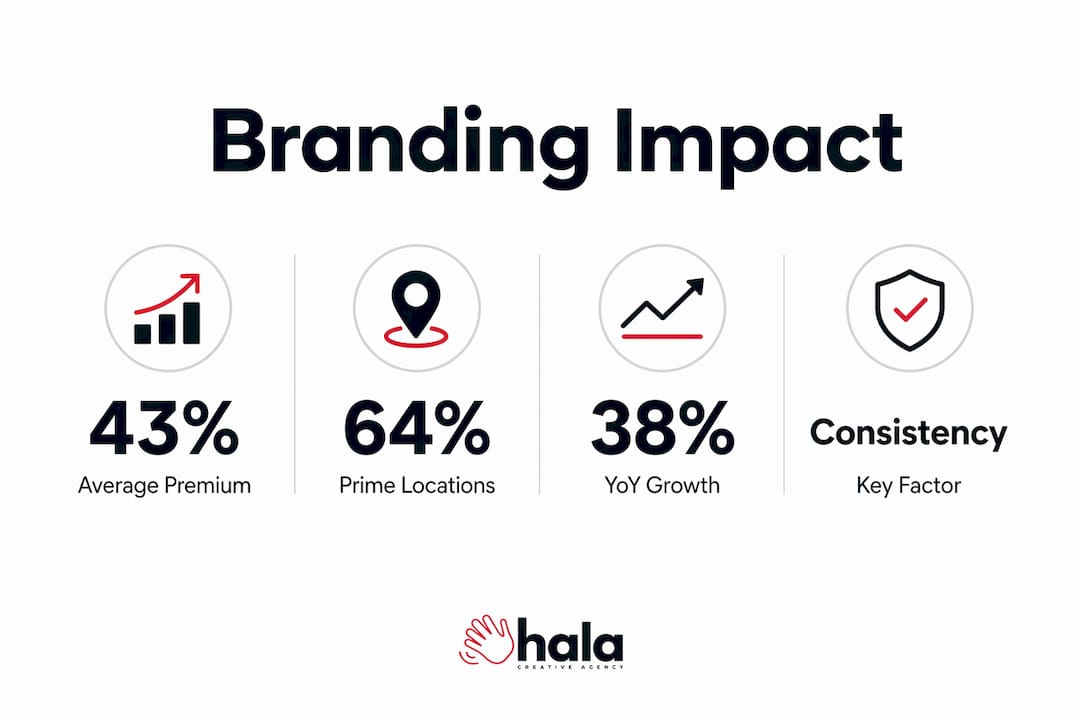
- Branding in UAE real estate is a confidence-building system that influences buyer perception before any contact occurs. In 2025, branded residences in Dubai commanded an average premium of 43%, with prime locations reaching 64%. Consistent messaging across digital, PR, and sales channels is essential for sustaining buyer trust and premium pricing.
In the UAE’s property market, branding does far more than put a name on a billboard. The role of branding in property sales has shifted from visual identity to a full confidence-building system, one that shapes how buyers perceive risk, value, and developer credibility long before they ever schedule a viewing. In a market where buyers regularly commit capital to off-plan projects they have never physically visited, trust is the actual product being sold. Developers and agents who understand this distinction consistently outperform those still treating branding as decoration.
Key Takeaways
| Point | Details |
|---|---|
| Branding builds trust before inquiry | Consistent brand signals shape buyer perception before any direct contact happens. |
| Branded homes command real premiums | Dubai branded residences averaged a 43% to 64% price premium over non-branded units in 2025. |
| Consistency across channels converts | Aligning messaging across digital, PR, and sales touchpoints reduces buyer hesitation and accelerates decisions. |
| Digital presence signals quality | Your website and SEO performance communicate brand credibility to international investors before human contact. |
| Branding is a system, not a campaign | Sustainable sales momentum requires repeated, coherent credibility signals throughout the entire buyer journey. |
The role of branding in property sales and buyer psychology
Buyers in the UAE property market do not make decisions based on listing photos alone. Trust and confidence now drive purchasing behavior more than marketing visibility ever did. A buyer researching a AED 3 million apartment in Dubai Creek Harbour is not just comparing square footage. They are evaluating whether they believe this developer will deliver, whether this project will hold value, and whether this brand stands behind its promise.

Branding shapes every part of that internal evaluation. Consider the difference between a developer with a consistent visual identity, professional digital presence, published case studies, and media coverage versus one with a polished floor plan PDF and an Instagram account updated twice a year. Both may be offering comparable products. Only one signals competence before the conversation starts.
Here is what branding actually controls in the buyer decision process:
- Credibility signals: Professional brand presentation tells buyers this developer is serious, organized, and trustworthy before a single word is exchanged.
- Risk reduction: Off-plan buyers carry real financial anxiety. Strong, consistent branding reduces perceived risk because it mirrors the behavior of organizations that follow through.
- Familiarity effect: Buyers who encounter your brand repeatedly across multiple channels feel a psychological familiarity that translates into confidence at the point of decision.
- Positioning clarity: Branding communicates exactly who this project is for, which filters out unqualified leads and attracts the right buyer profile faster.
Pro Tip: Track how many touchpoints a buyer has with your brand before they book a viewing. Most high-value conversions in Dubai real estate happen after five or more brand encounters, which means your branding system needs enough reach and consistency to generate that exposure before a competitor does.
The cumulative effect of brand signals across media, PR, digital platforms, and sales materials is not a soft marketing benefit. It is a measurable conversion driver.
The price premium that branding actually delivers
The importance of branding in real estate becomes concrete when you look at the numbers coming out of Dubai. In the first half of 2025, branded residences in prime locations commanded an average price premium of 64% over comparable non-branded units. The full-year average premium for 2025 settled at 43%, with branded residence prices averaging AED 3,777 per square foot, a 15% increase over 2024 pricing.
That is not a marketing claim. That is a documented price gap driven largely by brand perception.
“Branded residence premiums are tied closely to credibility, liquidity, and developer reputation, not just luxury claims.” — IRHM Branded Residence Report
Research from San Telmo Business School reinforces this: when design, technology, and branding align, property values increase by as much as 40%. The implication is clear. Branding is not a cost center. It is a value-creation mechanism with real balance sheet consequences.
Here is how the premium breaks down across key factors:
| Branding Factor | Impact on Premium |
|---|---|
| Developer track record and credibility | Foundation of all premiums; buyers pay more for proven delivery |
| Global luxury brand partnership | Adds psychological safety for off-plan buyers, especially international |
| Location alignment with brand identity | Prime locations amplify brand premiums more than secondary markets |
| Service culture integration | Premiums hold only when brand DNA is embedded in operations, not just marketing |
One critical nuance worth noting: these premiums vary significantly between prime and secondary submarkets in Dubai. A 64% premium in Palm Jumeirah does not translate directly to a project in a developing corridor. When presenting branded residence data to stakeholders, submarket specificity prevents overpromising and protects developer credibility.
The branded residences segment recorded 38% year-over-year transaction value growth in 2025, confirming that demand for this category is not plateauing. For developers, the question is no longer whether to invest in branding. It is whether their current branding strategy is strong enough to capture a share of that growth.
Building a branding strategy that sustains buyer confidence
Understanding how branding impacts real estate is one thing. Building a system that delivers it consistently is another. Effective branding in property marketing requires structural thinking, not just creative campaigns. Here is a practical framework developers and agents can apply:
- Define your brand position before any creative work. Decide who this project is for, what it stands for, and how it differs from the next three comparable developments launching in the same quarter. Every creative decision should follow from this, not the other way around.
- Align all channel messaging to a single brand narrative. The story your website tells should match your off-plan brochure, your social media presence, your PR coverage, and what your sales agents say in the first call. Consistent brand messaging is the difference between brands buyers trust and brands buyers Google to check for complaints.
- Choose brand partnerships based on DNA alignment, not name recognition. Luxury brand collaborations work in Dubai when the partner’s identity is embedded in architecture and service culture, not just printed on signage. Slapping a hospitality brand’s name on a project without integrating its standards will generate skepticism faster than it generates sales.
- Build a post-handover brand presence. The branding strategy does not end at sale. Buyers talk to each other. Community management, property management quality, and developer responsiveness after delivery all feed back into brand reputation for the next project launch.
- Adapt messaging to the current market climate. In periods of high inventory, buyers need reassurance about completion and quality. In undersupply conditions, buyers respond to scarcity and exclusivity narratives. Branding that builds trust and sustains momentum does so because it reads the room and adjusts without losing its core identity.
Pro Tip: Audit your branding across every buyer touchpoint at least once per quarter. Check your Google Business profile, your WhatsApp response tone, your sales deck language, and your paid ad copy against your defined brand position. Inconsistencies at any point erode the confidence you built everywhere else.
Developers who treat branding as an investor confidence system rather than a launch campaign are the ones who sustain sales velocity through longer cycles and market fluctuations.
Digital presence and cultural relevance in UAE property branding
For international buyers, your digital presence is your brand. A Singaporean investor or a European high-net-worth individual researching a Dubai property will form their first brand impression from your website, your Google search ranking, and your social media footprint. That impression happens before any human interaction.
Websites, SEO, and digital content are not supplementary marketing activities. They are core branding infrastructure for any developer targeting cross-border capital, which in Dubai’s market means most of them.
Specific digital branding priorities for UAE property developers include:
- Website quality as brand proxy: A slow, outdated, or visually inconsistent website tells international buyers this developer does not pay attention to detail. Invest in a website that matches the quality level of the product.
- SEO as long-term credibility: Ranking for relevant search terms signals market authority. Buyers who find you organically trust you more than buyers who click a paid ad. A focused real estate SEO strategy compounds over time in a way no ad budget can replicate.
- Social proof and storytelling: Video walkthroughs, resident testimonials, construction progress updates, and handover events all feed a digital brand narrative that supports the offline sales experience. Building Instagram presence with strategic consistency matters more than follower count.
- Cultural sensitivity in messaging: Branding that resonates with an Emirati buyer, a South Asian investor, and a European purchaser simultaneously requires deliberate creative choices. Generic luxury messaging lands poorly with experienced buyers who recognize it as placeholder content.
The social media dimension of real estate branding also deserves its own strategic attention. Agents and developers who use social platforms to document process, share market knowledge, and build community around a project create buyer familiarity at scale before any one-on-one sales conversation begins.
My honest take on why branding fails in high-budget projects
I have watched well-funded property launches underperform because the developer treated branding as a deliverable rather than a discipline. A polished logo, a beautiful brochure, and a launch event do not constitute a brand. They constitute a launch.
What I have seen work consistently is something different: developers who build a brand ecosystem where every interaction, from the first Instagram ad to the post-handover community group, reinforces the same story. The physical product and the brand promise have to match. When a project is marketed as a lifestyle destination and delivers a building with no community management, the brand does not just fail. It becomes actively damaging to the next launch.
The uncomfortable truth is that many branding efforts fail not because of bad creative work but because of poor organizational alignment. The marketing team communicates one thing, the sales team says another, and the product delivers a third experience. No amount of advertising budget corrects that gap.
My recommendation: treat your branding investment in Dubai as an operational commitment, not a campaign spend. The developers I have seen sustain premium pricing and repeat buyer relationships are the ones who understand that brand reputation is built in the spaces between the marketing materials.
— Hisham
How Hala Creative Agency helps UAE developers build brands that sell
If the principles above describe where you want to go but your current brand presence does not reflect that level of strategic depth, working with a specialist agency changes the trajectory significantly.
Hala Creative Agency works with real estate developers and property professionals across the UAE to build multi-touchpoint brand strategies that generate buyer confidence at every stage of the sales cycle. From digital presence and SEO to brand narrative development and campaign execution, the team brings the cross-channel consistency that converts research into reservations. Whether you are launching a new development or repositioning an existing one, understanding why expert branding drives growth in Dubai’s market is the first step. The second step is building a system capable of delivering it.
FAQ
What is the role of branding in property sales?
Branding shapes buyer confidence and perceived value before any direct sales interaction occurs. In the UAE market, it functions as an investor confidence system that builds credibility across multiple touchpoints throughout the buyer journey.
How much premium do branded properties command in Dubai?
In 2025, branded residences commanded an average premium of 43% over non-branded units, rising to 64% in prime locations during the first half of the year.
What are the most effective branding strategies for property sales?
Consistency across all buyer touchpoints is the most important factor. Aligning website quality, social media, sales team messaging, PR coverage, and post-handover communication into a single coherent brand narrative is what distinguishes developers who sustain premium pricing.
Why does digital branding matter for UAE real estate developers?
International buyers form their first brand impression digitally. A strong website, credible SEO presence, and active social media strategy collectively signal developer quality to cross-border investors who cannot visit in person.
Can small or mid-size developers benefit from real estate branding?
Absolutely. The branding benefits for home sellers and smaller developers are proportionally significant. Consistent brand positioning reduces sales cycles and increases buyer confidence regardless of project scale, making it one of the highest-return investments available to developers at any tier.